Sitemizdeki deneyiminizi geliştirmek için çerez kullanıyoruz. Sitemizi kullanarak çerezlere izin vermiş olursunuz. Daha fazla
The Foundation of Healthy Smiles Begins in Childhood
Pedodontics (Pediatric Dentistry) is the branch of dentistry dedicated to maintaining the health and development of primary and permanent teeth in children aged 0–13, as well as providing treatment when necessary. This field requires specialized approaches tailored to children’s physical and psychological needs, making it a highly sensitive and skilled area of dentistry.
Pediatric dentistry is not limited to treating cavities; it also includes dental development monitoring, trauma management, preventive applications, and orthodontic guidance. The oral hygiene habits developed during childhood are the key to a lifetime of healthy teeth and confident smiles.
Pediatric Dental Treatments Include:
-
Preventive Dentistry: Cavity-preventive applications such as fissure sealants and fluoride treatments
-
Cavity Treatments: Fillings and root canal therapy for both primary and permanent teeth
-
Tooth Extractions: Removal of decayed or naturally shedding teeth
-
Space Maintainers: Devices to preserve the space for permanent teeth after early loss of primary teeth
-
Trauma Management: Emergency treatment for tooth fractures or falls
-
Habit-Breaking Appliances: Tools to help prevent habits like thumb sucking or nail biting
-
Early Orthodontic Guidance: Monitoring jaw growth and tooth alignment at an early stage
Why Choose a Pedodontist?
Children’s oral structures and emotional responses differ from adults, which is why pedodontists:
-
Use communication and techniques suited to child psychology
-
Reduce fear and anxiety through friendly, patient-centered approaches
-
Offer a gentle and understanding treatment process
-
Monitor developmental changes with precision
-
Help children build long-term trust and comfort with dental visits
When Should Your Child Visit the Dentist?
According to the World Health Organization and the Turkish Society of Pediatric Dentistry, a child’s first dental visit should take place when the first tooth erupts, or by age one at the latest. This visit helps familiarize the child with the dental environment and establishes a positive start to lifelong oral care.
Preventing Dental Fear: Early Visits Build Confidence
Most dental fears in children stem from parents’ attitudes or painful first experiences at older ages. Early and gentle dental visits, guided by a pedodontic approach, help children form trust and comfort. Colorful fillings, playful introductions, and explanatory storytelling make the experience both fun and educational.
Frequently Asked Questions
-
Do baby teeth really need treatment since they will fall out anyway?
Yes. Baby teeth are essential for chewing, speech, and guiding permanent teeth. Early loss may lead to misalignment or developmental issues in the jaw. -
Is fluoride treatment harmful?
No. When applied in the correct dose under professional supervision, fluoride reduces cavity formation by 40–60%. -
What is a space maintainer and why is it used?
It is an appliance used to preserve the space for a permanent tooth after early loss of a baby tooth, preventing crowding or misalignment. -
How can dental fear be prevented?
Introducing the dentist early with painless, positive visits helps build trust. Avoid forcing the child and allow the dentist to establish a friendly connection. -
At what age should brushing habits begin?
Oral cleaning should start when the first tooth appears. From age 2, fluoride toothpaste can be used. Parental supervision is recommended until age 6–7.
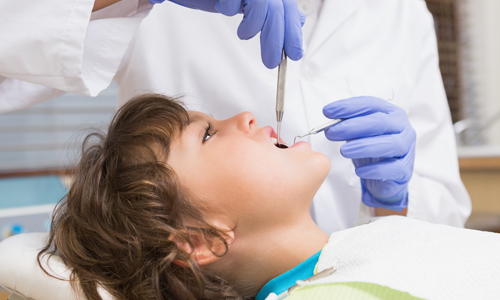
Dental Treatment Under General Anesthesia
Comfortable, Painless, and Fear-Free Dental Treatment Is Possible
For many people, dental treatment can be a source of anxiety and stress. In particular, children, individuals with disabilities, patients with developmental disorders, or those with severe dental phobia may not respond well to traditional treatment methods. In such cases, dental treatment under general anesthesia offers a more comfortable and safer solution for both the patient and the dentist.
General anesthesia allows the patient to be fully asleep and unconscious during treatment, ensuring they feel no pain, sound, or discomfort. It is especially advantageous when multiple dental procedures need to be completed in a single session.
When Is General Anesthesia Preferred?
For individuals with severe dental anxiety or phobia
For patients with mental or physical disabilities
For young children who cannot cooperate during treatment
For patients with low pain tolerance or resistance to local anesthesia
When multiple dental treatments must be performed in one session
Dental Treatments That Can Be Performed Under General Anesthesia
Tooth extractions
Root canal treatments
Dental fillings
Gum treatments
Surgical procedures (impacted teeth, cyst removal, etc.)
Prosthetic applications
Pediatric dental treatments
How Does the General Anesthesia Process Work?
Pre-Examination and Consultation
The patient’s overall health condition is evaluated. A consultation is held with the anesthesiologist, and necessary blood tests and examinations are performed.
Hospital or Surgical Center Setting
General anesthesia is administered in a fully equipped hospital or surgical center with maximum safety precautions.
Treatment Phase
The patient is completely asleep, and all necessary dental procedures are carried out. The process typically lasts between 1–2 hours.
Recovery and Monitoring
After treatment, the patient rests in a recovery room under observation and is usually discharged the same day.
Advantages
A completely painless and comfortable treatment experience
High success rate in patients resistant to standard dental procedures
Time efficiency — multiple treatments in one session
Prevention of psychological trauma in children
Safe intervention in complex dental cases
Who Is Not Suitable for General Anesthesia?
Patients with severe heart or respiratory diseases
Individuals who are medically unsuitable for anesthesia
Pregnant women in their first or last trimester
Note: Each patient must undergo a thorough pre-assessment before the procedure.
Frequently Asked Questions
Is general anesthesia safe for dental treatments?
Yes. When performed by experienced anesthesiologists in well-equipped facilities, it is very safe.
What age group is suitable for this treatment?
It can be safely performed on individuals over 3 years old who are medically eligible.
How many teeth can be treated under general anesthesia?
Depending on the patient’s condition, all necessary treatments can be completed in one session — this is one of its biggest advantages.
Will there be pain after the procedure?
No pain is felt during the procedure, and any mild discomfort afterward can be easily managed with prescribed medication.
Is this procedure covered by insurance?
In certain cases (e.g., patients with disabilities or specific medical conditions), coverage may be available. It is best to check with the Social Security Institution (SGK) for details.
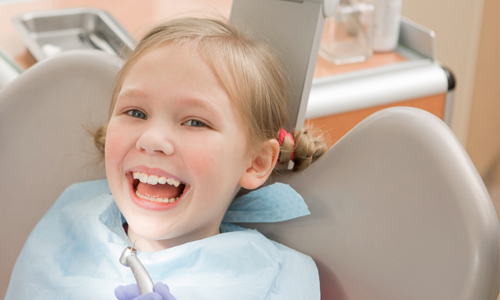
Space Maintainers
A Small but Critical Helper in Protecting Children’s Dental Development
Space maintainers are orthodontic devices used in children when a primary tooth is lost prematurely. Their purpose is to preserve the space for the permanent tooth to erupt in the correct position. This simple yet effective preventive treatment helps avoid future orthodontic problems such as crowding, impacted teeth, or misalignment.
Primary teeth not only serve a chewing function but also act as “guides” for the permanent teeth underneath. When a primary tooth is lost early, the adjacent teeth may drift into the empty space, blocking the area where the permanent tooth should erupt. Space maintainers prevent this from happening, allowing healthy and natural dental development.
What Is a Space Maintainer?
A space maintainer is a fixed or removable appliance designed to hold the space after the premature loss of a baby tooth. It ensures that the permanent tooth erupts in its proper position. These appliances are usually made from metal or clear materials.
Why Are Space Maintainers Used?
Early loss of a primary tooth due to decay or trauma
Delay in the eruption of the permanent tooth
To prevent adjacent teeth from shifting into the gap
To preserve jaw and tooth alignment
To reduce the need for future orthodontic treatment
Types of Space Maintainers
Fixed Space Maintainers
Bonded to the tooth and remain in place
Can be used for single or multiple spaces
Do not require removal by the child
Removable Space Maintainers
Can be inserted and removed like a small denture
Preferred when multiple spaces are involved
Require consistent cleaning and daily use
When Should a Space Maintainer Be Placed?
A space maintainer should be placed soon after the loss or extraction of a baby tooth, especially if the permanent tooth will not erupt for 6 months or more. This prevents the space from closing and supports healthy dental growth.
Care Instructions for Space Maintainers
Attend all dental check-ups as recommended
Avoid hard or sticky foods if the device is fixed
Clean removable devices daily and wear them regularly
Maintain excellent oral hygiene
Contact the dentist if discomfort, irritation, or damage occurs
How Long Should a Space Maintainer Stay in Place?
Space maintainers remain until the permanent tooth begins to erupt and naturally fills the space. This period typically ranges from 6 months to 2 years, depending on the child’s dental development.
Frequently Asked Questions
Is the placement of a space maintainer painful?
No. It is generally a painless procedure. If a baby tooth extraction is needed, it is done under local anesthesia, and the placement itself is simple.
What happens if a space maintainer is not used?
Neighboring teeth may shift into the empty space, leading to impacted or misaligned permanent teeth.
Does a space maintainer look like braces?
Fixed types are placed behind the teeth and are usually invisible from the outside. Removable ones resemble clear retainers or small dentures.
Does every child need a space maintainer?
No. They are only required when a baby tooth is lost earlier than normal eruption time.
Do space maintainers have any side effects?
When properly fitted and monitored, they are completely safe and actually prevent more serious orthodontic issues in the future.
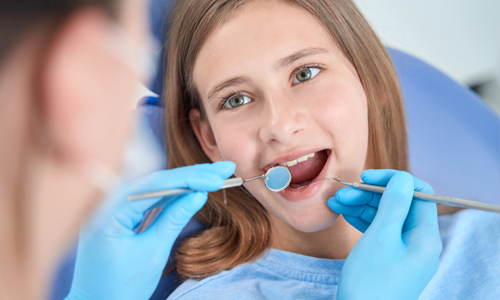
Dental Injuries in Children
Prevent Permanent Damage with Early Intervention
Dental injuries in children are quite common, especially during preschool and primary school years. Falls, bumps, sports activities, or accidents during play can cause various types of trauma, such as fractures, displacement, or complete avulsion of baby or permanent teeth. These injuries affect not only aesthetics but also chewing, speech, and overall dental development.
Quick and correct intervention significantly increases the chance of saving the tooth. Therefore, it is crucial for parents, teachers, and caregivers to be aware of how to handle dental injuries in children.
Most Common Dental Injuries in Children
Tooth Fracture:
Cracks or breaks in the enamel or dentin layer of the tooth; sometimes the pulp (nerve tissue) may also be exposed.
Tooth Displacement (Luxation):
The tooth moves from its original position — forward, backward, or sideways — often causing damage to the surrounding tissues.
Complete Tooth Avulsion:
The tooth is completely knocked out of its socket and requires immediate emergency care.
Tooth Intrusion:
The tooth is pushed into the bone, usually seen in severe trauma.
Injuries to Primary Teeth:
Must be carefully evaluated, as they can affect the developing permanent tooth underneath.
What to Do in an Emergency
If there is a broken piece, keep it — ideally in milk or a clean cloth.
If a tooth has been completely knocked out, hold it by the crown (not the root), gently rinse it with clean water, and try to reposition it. Then visit a dentist immediately.
If it cannot be reinserted, store it in milk or saline solution and reach a dentist as quickly as possible.
If there is bleeding, apply gentle pressure with sterile gauze.
Apply a cold compress for pain or swelling (do not place ice directly on the tooth).
Treatment Methods
Treatment depends on the child’s age, the type of tooth, and the severity of the trauma:
Composite fillings or bonding of the fractured tooth fragment
Root canal or pulp therapy (vital pulp treatment)
Repositioning and splinting (stabilization) of the tooth
Extraction and space maintainer placement if necessary
For primary teeth, treatment is usually focused on maintaining function and aesthetics, whereas in permanent teeth, long-term preservation is the goal.
Prevention Tips
Children involved in sports should use custom-made mouthguards.
Ensure safe environments at home and school; cover sharp corners and edges.
Teach children not to play alone in high-risk areas.
Schedule regular dental checkups to monitor tooth and jaw development.
Frequently Asked Questions
My child’s tooth broke — what should I do immediately?
Keep the broken fragment clean, calm your child, and visit a dentist as soon as possible.
Do injuries to baby teeth require treatment?
Yes. Even baby tooth trauma can affect the developing permanent teeth and must be examined by a dentist.
How soon should we visit the dentist if a tooth is completely knocked out?
Ideally within 30 minutes — early intervention greatly increases the chance of saving the tooth.
Can a reimplanted tooth remain permanently?
Yes, especially for permanent teeth, success rates are high. However, age, type of trauma, and timing of intervention are critical factors.
My child doesn’t feel pain but suffered a blow to the mouth. Should we still see a dentist?
Absolutely. Even if there are no visible symptoms, internal damage may exist — an X-ray examination is essential.
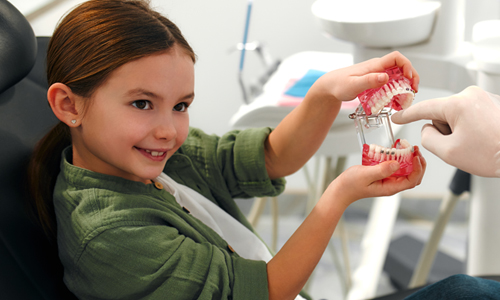
Primary Tooth Root Canal Treatments
Prevent Permanent Damage with Early Intervention
Dental injuries in children are quite common, especially during the preschool and early school years. Falls, bumps, sports activities, or accidents during play can cause various types of dental trauma such as fractures, displacement, or complete tooth loss. These injuries can affect not only the child’s appearance but also their chewing ability, speech, and dental development.
Quick and proper intervention greatly increases the chance of saving the tooth. Therefore, it is essential for parents, teachers, and caregivers to be aware of how to respond to dental trauma in children.
Most Common Dental Injuries in Children
Tooth Fracture:
A crack or break in the enamel or dentin layer of the tooth. Sometimes, the pulp (nerve tissue) may also be exposed.
Tooth Displacement (Luxation):
The tooth moves from its original position — forward, backward, or sideways. Supporting tissues may also be damaged.
Complete Tooth Avulsion:
The tooth is completely knocked out of its socket. Immediate emergency care is required.
Tooth Intrusion:
The tooth is pushed into the bone, typically as a result of severe trauma.
Primary Tooth Injuries:
Should be carefully evaluated, as they can affect the developing permanent teeth.
What to Do in an Emergency
If a tooth fragment is broken, keep it safe — preferably in milk or a clean cloth.
If a tooth has fallen out, hold it by the crown (not the root), gently rinse with clean water, and try to reposition it. Visit the dentist immediately.
If the tooth cannot be reinserted, store it in milk or saline solution and reach the dentist as soon as possible.
Apply light pressure with sterile gauze if there is bleeding.
Use a cold compress to reduce pain and swelling — never apply ice directly to the tooth.
Treatment Methods
Treatment varies depending on the child’s age, the tooth involved, and the severity of the injury:
Composite fillings or reattachment of the broken fragment
Root canal or vital pulp therapy
Repositioning and splinting (stabilizing) the tooth
Extraction and space maintainer placement if necessary
In primary teeth, treatment generally focuses on maintaining function and appearance, while in permanent teeth, long-term preservation is the priority.
Prevention Methods
Children engaged in sports should wear custom-made mouthguards.
Create safe play environments at home and school; cover sharp corners and edges.
Teach children not to play alone in high-risk or elevated areas.
Schedule regular dental checkups to monitor tooth and jaw development.
Frequently Asked Questions
My child’s tooth broke — what should I do?
Keep the broken fragment clean, calm your child, and visit a dentist as soon as possible.
Do baby tooth injuries require treatment?
Yes. Injuries to baby teeth can affect the developing permanent teeth underneath, so professional evaluation is essential.
If a tooth is completely knocked out, how soon should we see a dentist?
Within 30 minutes. The sooner you get professional help, the higher the chances of saving the tooth.
Can a reimplanted tooth stay permanently?
In permanent teeth, success rates are high, but age, type of trauma, and timing of intervention all play a role.
My child’s tooth was injured, but they don’t feel pain — should I still take them to a dentist?
Absolutely. Damage may not always cause immediate symptoms. An X-ray evaluation is important to rule out hidden trauma.
