Sitemizdeki deneyiminizi geliştirmek için çerez kullanıyoruz. Sitemizi kullanarak çerezlere izin vermiş olursunuz. Daha fazla
Functional and Aesthetic Restoration of Lost Teeth
Prosthetic dental treatments are a branch of dentistry that aims to restore teeth lost or damaged due to various reasons — both functionally and aesthetically. These treatments help patients regain proper chewing ability, speech, and a natural-looking smile. Whether fixed or removable, prosthetic restorations not only support oral health but also significantly improve quality of life.
Tooth loss is not merely an aesthetic concern; it can also cause chewing difficulties, digestive problems, jaw joint disorders, and shifting of remaining teeth. Prosthetic treatments are personalized solutions designed to eliminate these negative effects.
Types of Prosthetic Dental Treatments
-
Fixed Prostheses (Bridges and Crowns):
Spaces caused by missing teeth are closed using porcelain, zirconium, or E-max crowns supported by adjacent healthy teeth. -
Removable Prostheses (Full or Partial Dentures):
Used when the jawbone or surrounding teeth cannot support fixed restorations. These dentures can be easily inserted and removed by the patient. -
Implant-Supported Prostheses:
Applied over dental implants placed in the jawbone to replace missing teeth. These can be either fixed or removable. -
Temporary Prostheses:
Short-term solutions used to maintain aesthetics and function until permanent restorations are completed.
When Are Prosthetic Treatments Needed?
-
In cases of tooth loss
-
When teeth have severe structural damage
-
When teeth are misshapen or discolored
-
For completely edentulous patients (total dentures)
-
For patients requiring implant-supported fixed teeth
Advantages of Prosthetic Treatments
-
Restores chewing and speech functions
-
Improves self-confidence through aesthetic enhancement
-
Supports facial structure, preventing premature aging
-
Prevents misalignment of remaining teeth
-
Provides durable, long-lasting results
Treatment Process
During the first consultation, the patient’s oral condition, missing teeth, bone structure, and expectations are evaluated. Measurements are taken, and the prosthesis is custom-made in a dental laboratory. After one or two fitting sessions, the prosthesis is permanently placed or delivered to the patient. Adaptation usually occurs within a short time.
Frequently Asked Questions
-
What is the difference between fixed and removable prostheses?
Fixed prostheses are cemented and cannot be removed by the patient. Removable ones can be inserted and taken out freely. -
Do prostheses look like natural teeth?
Yes. Especially with modern materials such as zirconium and E-max, fixed prostheses can achieve an appearance very close to natural teeth. -
Do prostheses cause pain?
A slight discomfort may occur initially, but patients adapt quickly. Adjustments can be made if necessary. -
Do removable dentures affect speech or chewing?
There may be a short adjustment period, but with regular use, speech and chewing functions return to normal. -
How long do prostheses last?
With proper care and regular dental check-ups, prostheses can last 5–10 years. Over time, they may need replacement due to natural changes in oral anatomy.
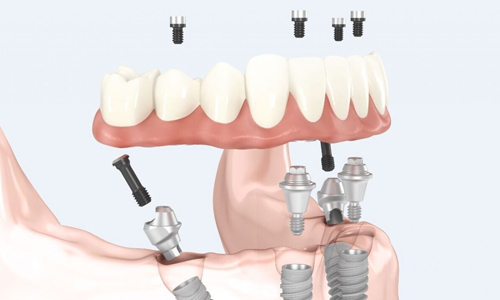
Fixed Prostheses
A Permanent and Comfortable Solution for Missing Teeth: Fixed Dental Prostheses
Fixed prostheses are artificial teeth made to replace those lost for various reasons. They are permanently attached in the mouth and cannot be removed by the patient. While eliminating aesthetic concerns, they also restore chewing and speaking functions and support dental alignment, making them one of the most preferred modern treatment options.
Tooth loss affects more than just appearance — it can also lead to functional and psychological issues. Fixed prostheses address these deficiencies, offering an experience that closely resembles natural teeth.
Types of Fixed Prostheses
Crown:
A cap placed over a tooth that has been reshaped due to decay, fracture, or aesthetic problems. It can be made from porcelain, zirconium, or metal-supported materials.
Bridge:
A fixed prosthesis used to replace one or more missing teeth by anchoring onto adjacent healthy teeth. The empty space is filled with artificial teeth.
Implant-Supported Fixed Prostheses:
These are prosthetic teeth placed on dental implants that are surgically inserted into the jawbone. They are the most comfortable and long-lasting type of fixed prosthesis.
Laminate Veneers (Porcelain Laminates):
Thin, aesthetic porcelain shells used primarily on front teeth for smile design purposes.
When Are Fixed Prostheses Used?
In cases of single or multiple tooth loss
When aesthetic appearance is compromised
For broken, worn, or decayed teeth
When chewing or speaking functions are reduced due to missing teeth
To prevent shifting of adjacent teeth
When planning implant-supported restorations
Advantages of Fixed Prostheses
Provide the closest function and appearance to natural teeth
Do not move in the mouth, ensuring secure use
Restore chewing and speaking functions
Support facial aesthetics and prevent an aged appearance
Long-lasting — with proper care, can last 10 years or more
Prevent shifting of teeth and jaw misalignments
Treatment Process
Initial examination and X-ray evaluation are performed.
Dental impressions are taken, and the appropriate prosthesis type is selected.
The necessary teeth are prepared (reshaped) and temporary crowns are placed.
The final prosthesis is fabricated in a laboratory and permanently cemented during the final visit.
Follow-up appointments may be scheduled to ensure proper adaptation.
The entire process usually takes about 7–10 days.
Post-Treatment Care
Brush teeth at least twice a day
Use dental floss and interdental brushes
Avoid excessively hard foods
Visit your dentist regularly for checkups
Maintain good oral hygiene at all times
Frequently Asked Questions
Do fixed prostheses cause pain?
No. The procedure is performed under local anesthesia, and patients quickly adapt after placement.
Do fixed prostheses look like natural teeth?
Yes. Especially those made from zirconium or porcelain closely mimic the appearance of natural teeth.
How long do fixed prostheses last?
With proper care and regular dental visits, they can last for 10 years or longer.
Can I eat normally with fixed prostheses?
Yes. Well-made fixed prostheses restore natural chewing comfort.
Should I choose implants or bridges for missing teeth?
It depends on individual factors such as bone structure, aesthetic expectations, and budget. Your dentist will help determine the best option.

Removable Prostheses
A Practical and Economical Solution for Missing Teeth
Removable dentures are artificial teeth that patients can insert and remove themselves in cases of partial or complete tooth loss. Unlike fixed prostheses, they are not permanently attached to the mouth and are ideal when fixed prostheses or implants cannot be applied, or when all teeth are missing. Thanks to modern technology, removable dentures now offer highly aesthetic and functional results.
With the use of advanced materials and improved designs, today’s removable dentures provide a much more natural appearance and comfortable fit — allowing patients to regain a healthy, confident smile.
Types of Removable Dentures
Partial Denture:
Used when some natural teeth remain in the mouth. It attaches to existing teeth with metal clasps.
Complete (Full) Denture:
Applied when all teeth are missing in the upper and/or lower jaw. It fits over the gums and palate.
Precision Attachment Denture:
A more aesthetic and comfortable partial denture that uses hidden attachments instead of visible metal clasps.
Implant-Supported Removable Denture:
A type of removable denture supported by dental implants, offering greater stability and durability — often used for complete edentulism (toothlessness).
When Are Removable Dentures Preferred?
When the jawbone is unsuitable for fixed prostheses or implants
When multiple teeth are missing
In cases of complete tooth loss
When implants cannot be used due to age, health, or budget reasons
When a temporary replacement is needed
Advantages of Removable Dentures
Provide an alternative when fixed prostheses are not possible
Restore aesthetics by filling missing spaces
Improve speech and chewing function
Cost-effective and accessible treatment option
Easily repairable or adjustable when needed
Easy to clean and maintain since they can be removed
Treatment Process
Oral examination and X-rays are performed for planning.
Impressions of the upper and lower jaw are taken.
The denture is custom-made in a dental laboratory.
Trial fittings are done to ensure comfort and aesthetics.
The final denture is delivered, and usage instructions are provided.
Follow-up visits are scheduled within a few months to ensure adaptation.
Adapting to Removable Dentures
It may take a few weeks to get used to new dentures. In the first days:
Speech and chewing may feel different.
A sense of pressure or fullness in the mouth is normal.
Mild irritation or sensitivity may occur.
These are temporary. Necessary adjustments will be made during follow-ups, and the patient will adapt completely over time.
Frequently Asked Questions
Do removable dentures move in the mouth?
A well-made denture fits securely. Slight movement at first is normal and can be corrected with adjustments or relining.
Can I eat with my dentures?
Yes. Start with soft foods and gradually transition to normal chewing.
Will speaking be difficult with dentures?
Some speech difficulty may occur initially, but it typically resolves within a few days.
Should dentures be removed at night?
Yes. Dentures should be removed at night to allow gum tissues to rest and should be kept in a container filled with water.
How long do removable dentures last?
On average, 5–7 years. Over time, changes in mouth shape may require relining or replacement.
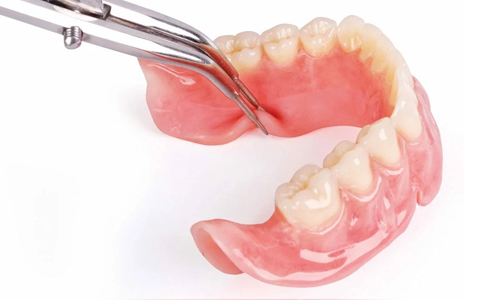
Complete Dentures
An Aesthetic and Functional Solution for Those Who Have Lost All Their Teeth
Complete dentures are removable full dental prostheses specially designed for individuals who have lost all of their teeth in the upper and/or lower jaw. Commonly known as “dentures,” these prostheses restore essential functions such as chewing, speaking, and smiling — providing both aesthetic and functional benefits.
With modern technology, complete dentures are now designed to closely resemble natural teeth and are customized to fit the individual’s oral anatomy for maximum comfort. They are an ideal and effective solution for elderly patients, long-term edentulous (toothless) individuals, or those who are not suitable candidates for implant treatment.
Who Are Complete Dentures Suitable For?
Individuals with no remaining natural teeth in the upper and/or lower jaw
Patients who cannot receive implants due to age, health condition, or low bone density
Those seeking a more economical alternative to fixed restorations
Individuals who temporarily need full dentures while waiting for other treatments
How Are Complete Dentures Made?
Examination and Planning: Oral tissues and jaw structure are carefully evaluated.
Impression Taking: Precise impressions are taken of the upper and lower jaws.
Jaw Relation and Try-ins: The alignment between the jaws is recorded, and trial fittings are made to assess comfort, aesthetics, and speech.
Fabrication and Delivery: The denture is custom-made in a dental laboratory and delivered to the patient after final adjustments.
Follow-Up and Adjustments: Minor corrections are made during follow-up visits to ensure optimal fit and comfort.
The entire process is typically completed within 2–3 weeks.
Advantages of Complete Dentures
Restore missing teeth in a natural and aesthetic way
Regain normal speech, chewing, and smiling functions
Support facial structure and reduce the collapsed appearance of the cheeks
Cost-effective and easy to apply
Removable for easy cleaning and maintenance
Easily repairable or replaceable when necessary
Getting Used to Complete Dentures
It may take a few weeks to fully adapt to new dentures. During this period:
Minor irritation, speech changes, or chewing difficulty may occur
Dentist adjustments can help improve comfort and fit
Patience and consistent use accelerate adaptation
How to Care for Complete Dentures
Rinse dentures after every meal
Clean once daily with a denture brush and mild soap (avoid toothpaste)
Remove and store in a water-filled container overnight
Brush the gums and oral tissues daily to maintain hygiene
Schedule regular dental checkups
Frequently Asked Questions
Will my denture move while speaking or eating?
Slight movement is normal at first, but oral tissues adapt over time. If necessary, the denture can be relined for better stability.
Can I eat with my complete denture?
Yes. Start with soft foods and gradually move to normal meals as you get used to it.
Will my speech change?
Initially, some pronunciation difficulties may occur, but speech returns to normal within a short time.
How long do complete dentures last?
With proper care, they typically last 5–7 years. However, due to natural bone and tissue changes, they may need to be remade later.
Should I remove my denture at night?
Yes. Removing it allows the tissues to rest and promotes oral health.
